logo-green
logo-green

AIS™ Active Isolation System

Active electronic-pneumatic vibration isolation with 3 or 6 degrees of freedom.
General

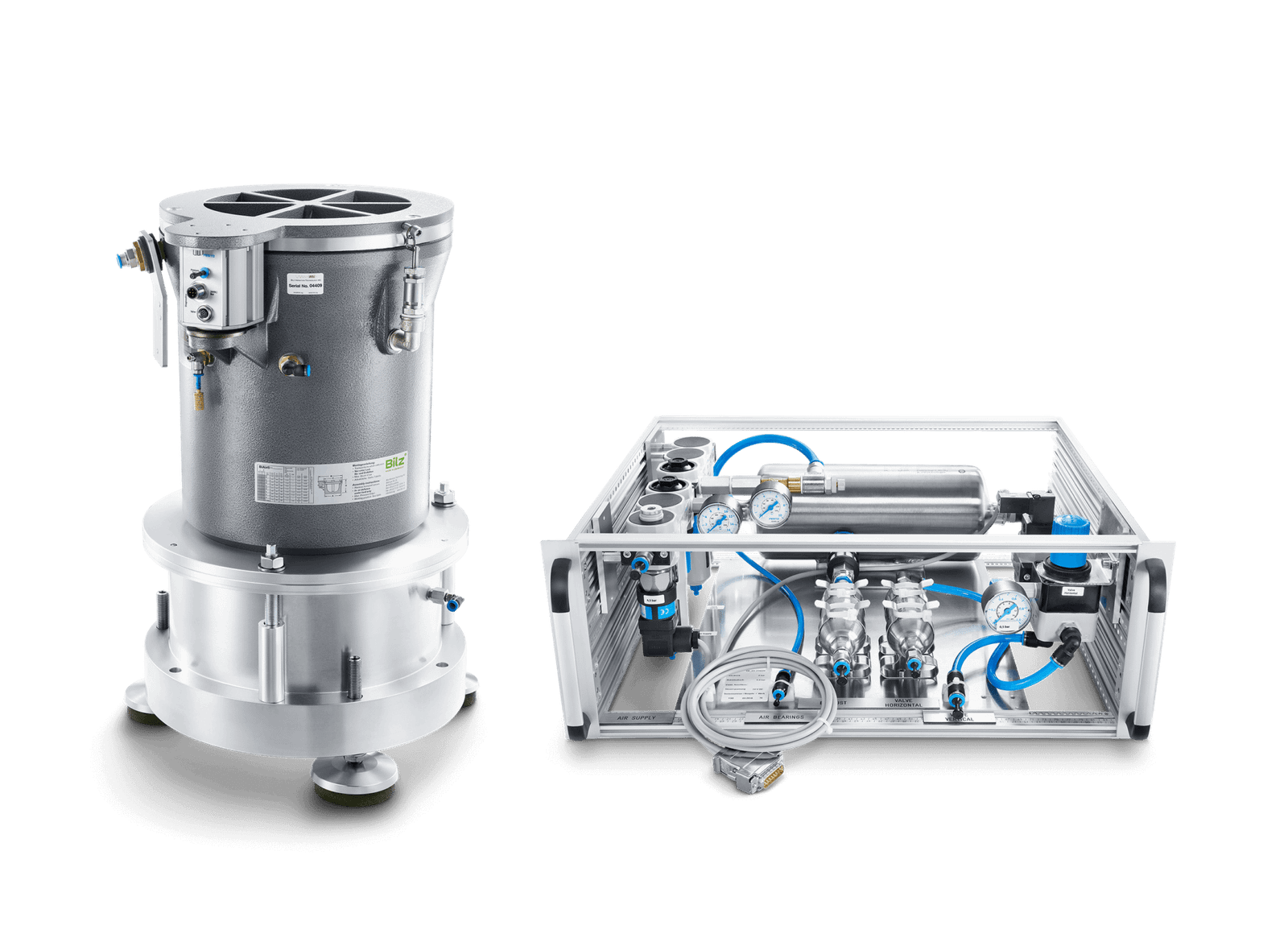
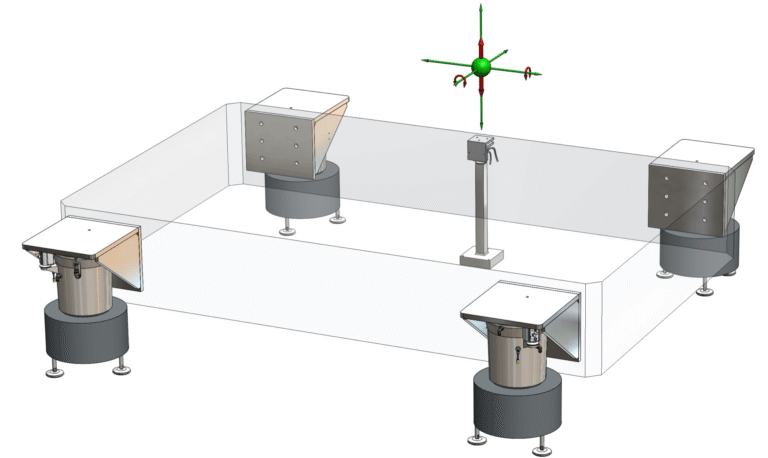
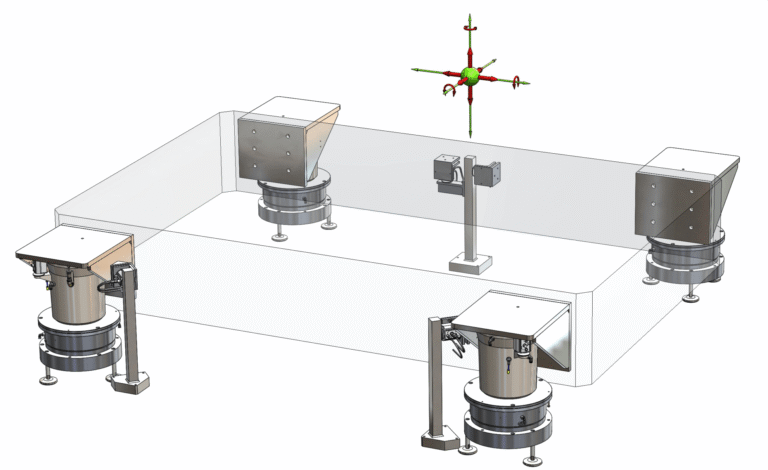
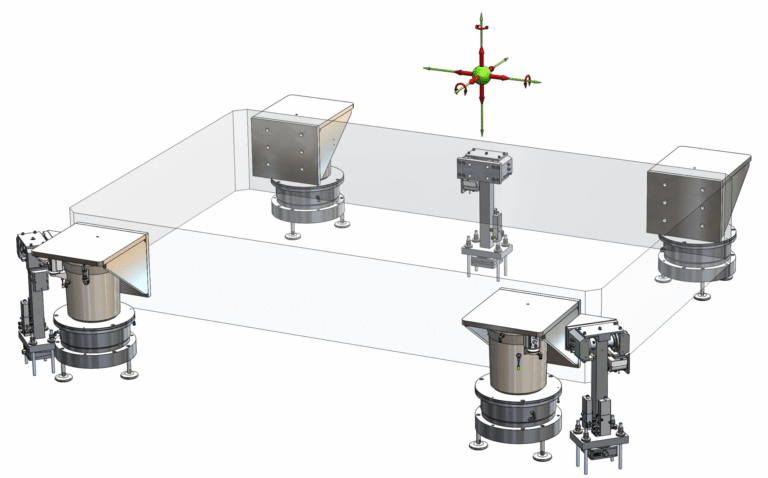
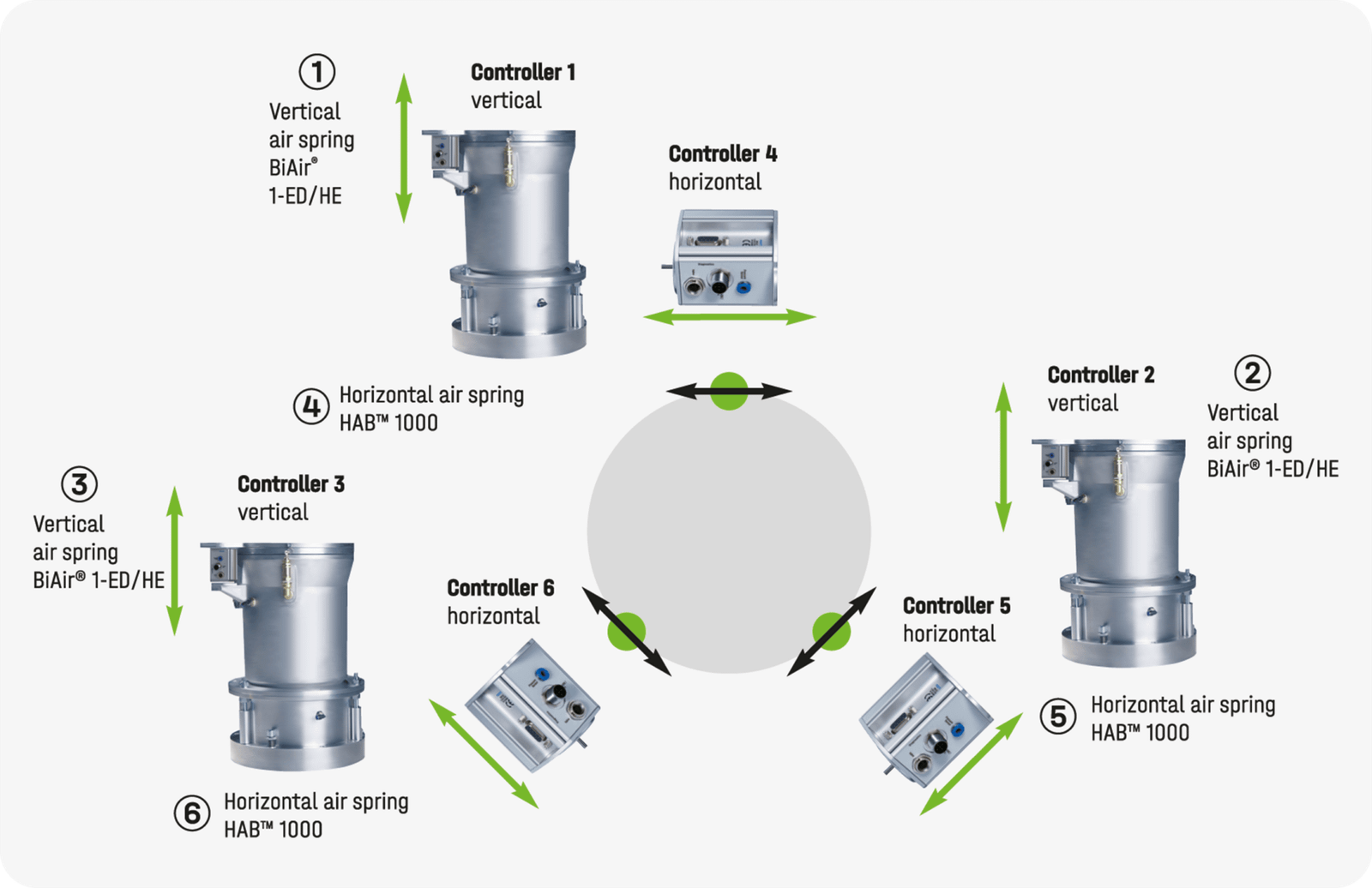
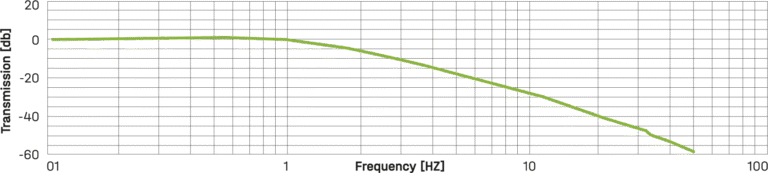
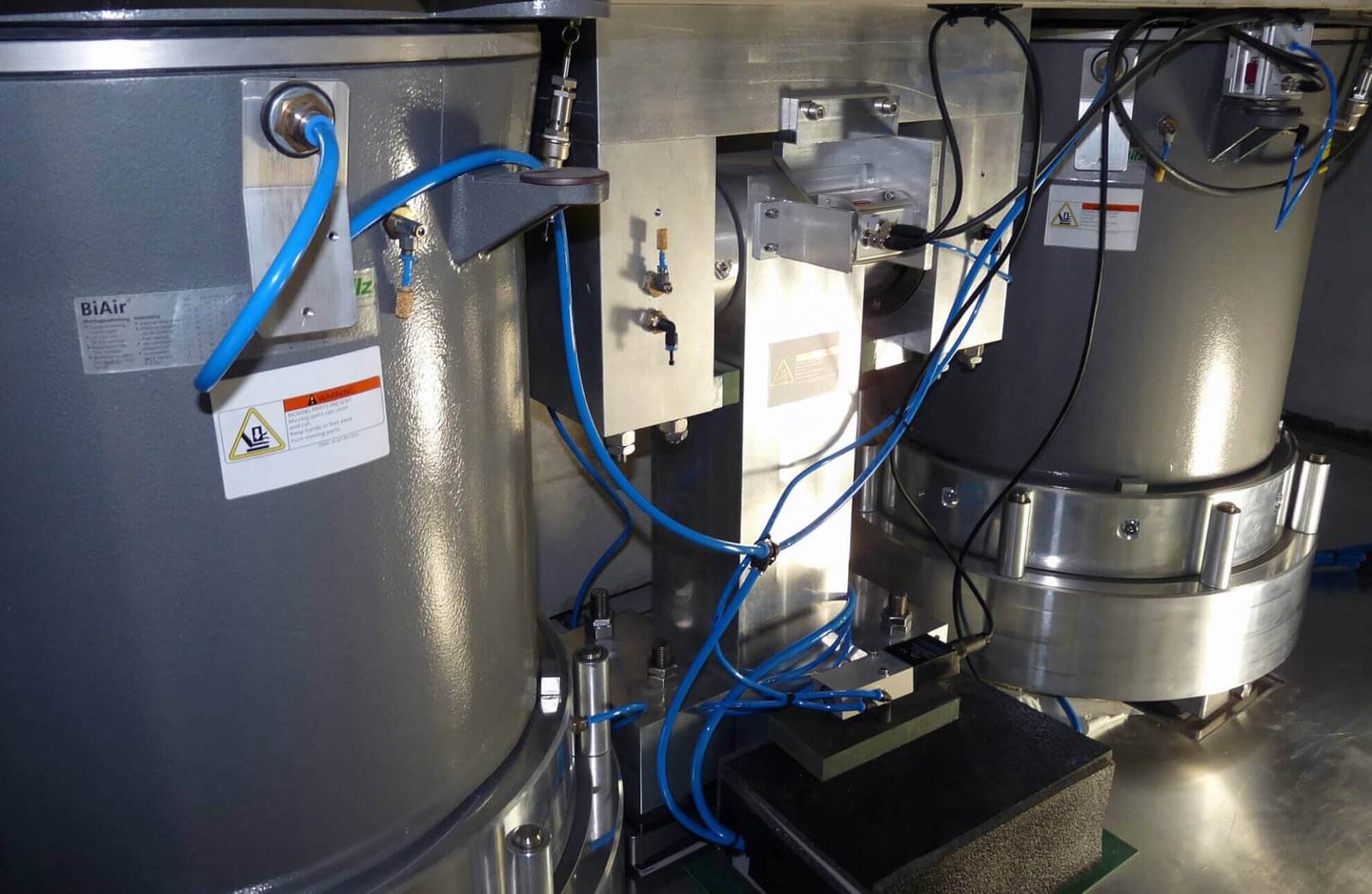
With the AIS™ Active Isolation System, active control significantly improves vibration isolation by suppressing amplification at resonance without degrading properties at higher frequencies. In this process, the AIS™ maintains its active properties over the entire working travel (stroke) of the air spring. In dynamic applications, the active response of the system ensures reduced deflection times after excitation. The system is consequently quicker at rest and in measuring tasks with positioning movements achieves shorter cycle times than passive systems. The special feature of the system is the pneumatic actuator principle, which covers a wide dynamic working range – even in the case of very heavy machines. Control bandwidths up to the 300 Hz range are possible due to extremely fast-reacting valves. The system reacts in real time and consequently so quickly that feed-forward signal control can be dispensed with. The AIS™ can be used with three or six actively controlled degrees of freedom (DOF). The system can be adapted to the different application requirements. Three vertically aligned controllers are used with three regulated degrees of freedom, which actively regulate the vertical position and the rotations around both horizontal axes. The other degrees of freedom are passively reset by the membranes. With the use of 6 controlled degrees of freedom, the HAB horizontal air springs are also used. In this configuration, six controllers are arranged both vertically and horizontally.

4-point AIS™ for 3 (3 DOF) actively controlled degrees of freedom

4-point AIS™ for 6 (6 DOF) actively controlled degrees of freedom

AIS™ High Performance

Additional BiAir air springs rotated by 90° are used in the AIS™ High Performance version to generate higher horizontal counter forces. The horizontal HAB air springs act purely as air bearings. This eliminates even minor friction effects and influences of the membrane.

Properties
  • Active electronic-pneumatic vibration isolation with up to six controlled degrees of freedom.
  • Can also be retrofitted from 3 to 6 DOF using spacers.
  • Highly effective vibration isolation almost without resonance amplification..
  • Optimal positioning precision in vertical and horizontal plane.
  • Minimal deflection and subsidence times when machine changes loads.
  • Highly effective real-time control.
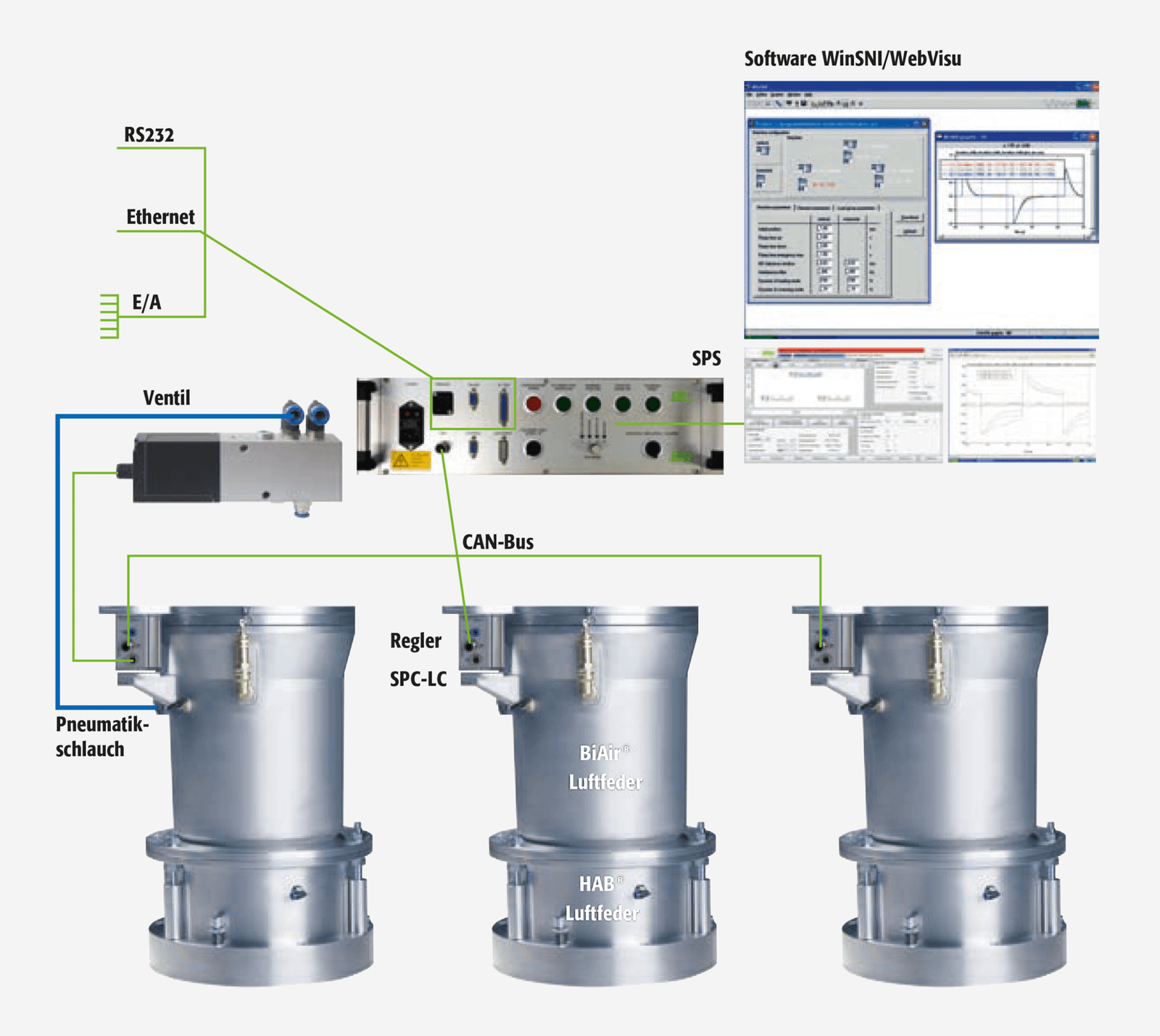
  • PLC, CAN bus and one control per degree of freedom and highly dynamic proportional position control valve.
  • Each control unit has a microprocessor and integrated, high-resolution sensor technology for position, pressure and acceleration.
  • Easy-to-use, intelligent software for commissioning and diagnostics.
  • Simple digital switching between scanning mode (during sensitive machine operations) and loading mode (during machine load changes).
  • No feed-forward signal required.
  • In contrast to electro-magnetic actuators or linear motors, no generation of heat or magnetic fields which could disturb machine operation.
AIS™ technical data overview
Technical DataAIS™ — 3 Degrees of FreedomAIS™ — 6 Degrees of FreedomAIS™ High Performance — 6 Degrees of Freedom
Typical system load*800 kg–120,000 kg800 kg–120,000 kg800 kg–120,000 kg
Vertical natural frequencies*1.2–2.5 Hz1.2–2.5 Hz1.2–2.5 Hz
Horizontal natural frequencies*2.2–2.8 Hz1.1–1.9 Hz0.8–1.9 Hz
Type of controlServo-pneumaticServo-pneumaticServo-pneumatic
Actively controlled frequency range0–15 Hz0–15 Hz0–15 Hz
Clean room suitableYesYesYes
Communication interfacesEthernet, Digital I/O, RS232Ethernet, Digital I/O, RS232Ethernet, Digital I/O, RS232
SENSOR RESOLUTION:
Sensor SpecificationAIS™ — 3 Degrees of FreedomAIS™ — 6 Degrees of FreedomAIS™ High Performance — 6 Degrees of Freedom
Displacement measuring system0.2 µm0.2 µm0.2 µm
Acceleration sensor8 µg8 µg8 µg
Pressure sensor0.2 mbar0.2 mbar0.2 mbar
Sampling rate sensor signals4 kHz (after oversampling)4 kHz (after oversampling)4 kHz (after oversampling)

Nanotechnology

Ground vibrations reduced by a factor of 1,000

Binnig and Rohrer Nanotechnology Center at IBM Research Laboratories: combined sound and vibration isolation for noise-free laboratories

Background

The promotion of nanoscience is pursued at the Binnig and Rohrer Nanotechnology Center at IBM in Zürich. The smallest structures in the field of nanometers are examined here in order to generate materials for information and semiconductor technology. It is obvious that exceptional demands are placed on these research laboratories.

A new laboratory concept for nanotechnology

The six noise-free laboratories of the nanotechnology centre are situated eight meters underground. Here the most sensitive and most demanding research experiments on the nanoscale can be conducted. Before this, all interference variables relevant to nanotechnology such as vibrations, electromagnetic fields, temperature, humidity and sound had to be equally considered and, if possible, eliminated. These objectives required a new laboratory concept.

We were part of the team of the noise-free Labs of IBM Research during the planning phase already. Our competent technical advice was crucial for the project. After successful tests, we developed the solution for the underground laboratories: isolation against ground vibrations and isolation against sound.

Highlight

We develop the solution for acoustics and ground vibrations from one source.

The illustration shows some of the most important measures to reduce external interference in the noise-free labs of the Binnig and Rohrer Nanotechnology Center of IBM and ETH Zurich.
The illustration shows some of the most important measures for reducing external interference in the “Noise-free Labs” of the Binnig and Rohrer Nanotechnology Center of IBM and ETH Zurich.
The sketch shows the result of perfect insulation with Bilz solutions for vibration isolation in the Binnig and Rohrer Nanotechnology Centers of IBM and ETH Zurich.
The sketch shows the result of perfect insulation with Bilz solutions for vibration insulation in the Binnig and Rohrer Nanotechnology Centers of IBM and ETH Zurich.

Tasks

The planning objective for the six noise-free laboratories was that spatial laboratory conditions must only deteriorate minimally. This is because the various technical devices in an experiment are often major disruptive factors: mechanical pumps for vacuum generation or warmth development for example, and electro-magnetic radiation from mains and control equipment. With traditional experiments it is sufficient to block off individual parameters such as temperature for example. With metrological developments in nanotechnology, however, there are experiments which are sensitive to multiple or all five disturbance variables. Therefore, temperature, humidity, vibrations, sound and electromagnetic fields should all be blocked off at the same time. These challenges could only be mastered by looking at the overall system.

Task 1: ground vibrations

At the beginning of the project phase different highly sensitive experiments were evaluated and measuring and fabrication devices taken into consideration. These highly sensitive instruments, for example electron beam recorders, transmission electron microscopes and spin-polarised scanning tunnelling microscopes had to be mounted vibration free.

bilz success-stories-binnig-rohrer-2 CAD drawing of the insulations with Bilz AIS™ Active Isolation System for Binning and Rohrer Nanotechnology Center by IBM and ETH Zurich.
CAD drawing of insulation with Bilz AIS™ Active Isolation System for Binnig and Rohrer Nanotechnology Center of IBM and ETH Zurich

Solution 1: Air cushioned foundation blocks

An air cushioned concrete block with the biggest possible mass was installed in each laboratory. The natural resonance of the air cushions is within the range of 1,2 – 2,4 Hz. The isolators are actively regulated through the air cushions. The experiments stand on these 34- to 80-tonne pedestals: the user, on the other hand, moves on a vibration decoupled floor.

For this a new Bilz product was used here, the AIS™ Active Isolation System High Performance, our active electronic-pneumatic vibration isolation for the highest demands for isolation effectiveness, decay time and level constancy.

Highlight

Underneath the laboratories trains drive past at high speed. The experiments are so well shielded, that this has no effect on the measurements.

Task 2: Air-borne noise

The smallest structures in the area of nanotechnology, such as molecules and atoms, are researched in the noise-free laboratories. Even the conditions of a clean room environment would be too “noisy” for this type of work.

Bilz success story: installation of acoustic insulation material in the experimental room Binning and Rohrer Nanotechnology Center (IBM Research Zurich)
Installation of Bilz acoustic insulation material in the Binnig and Rohrer Nanotechnology Center experiment room (IBM Research Zurich)
bilz success-stories-binnig-rohrer-2 Bilz success story: cross-section illustration of insulation with Bilz AIS™ Active Isolation System for Binning and Rohrer Nanotechnology Center by IBM and ETH Zurich.
Cross-section illustration of the insulations with Bilz vibration insulation for Binnig and Rohrer Nanotechnology Center of IBM and ETH Zurich.

Industrial metrology

For reproducible measurement accuracies in spaces smaller than 1µm

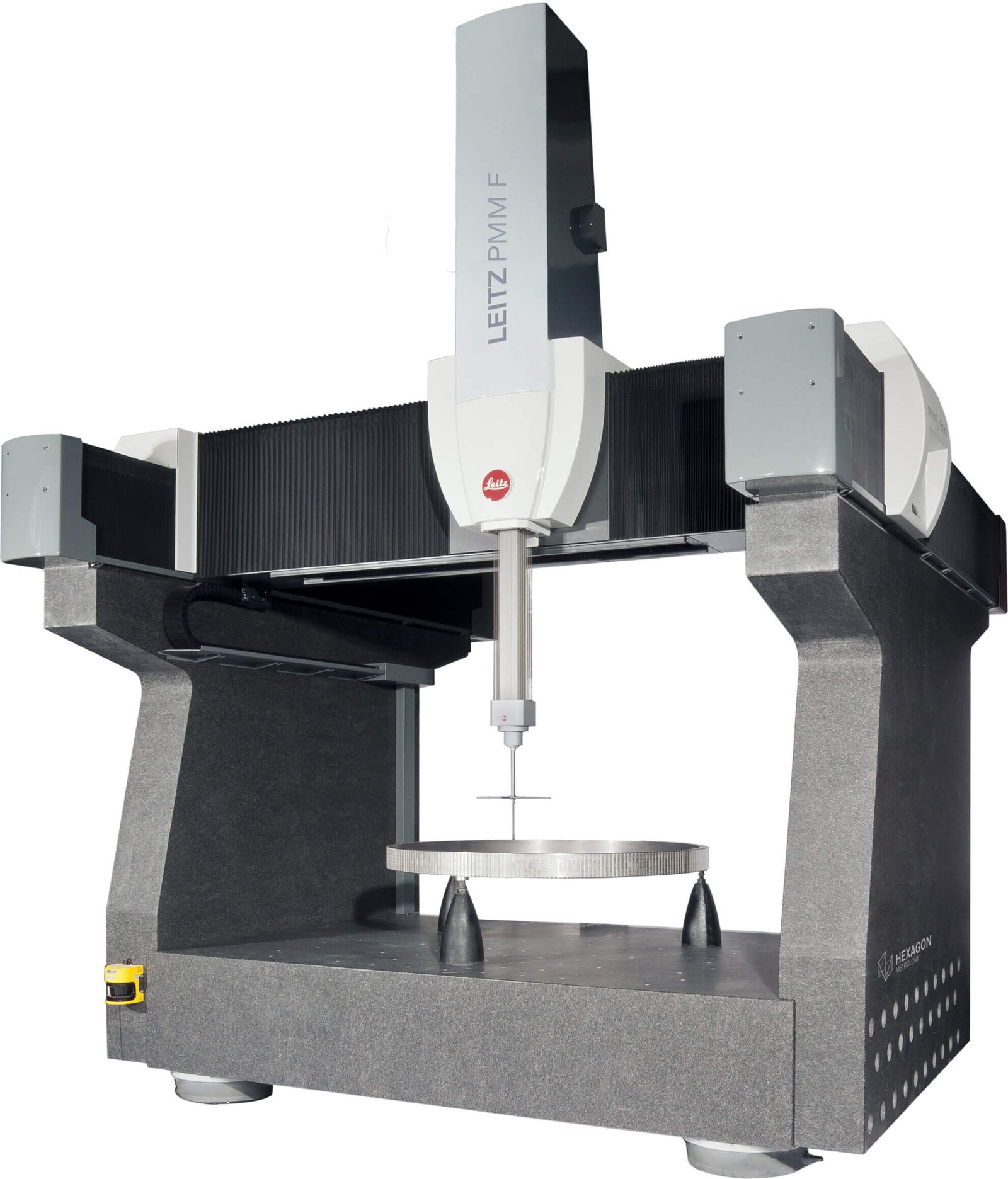
Hexagon Manufacturing Intelligence: our wide range of solutions for ultra-high accuracy measuring instruments

Background

The promotion of nanoscience is pursued at the Binnig and Rohrer Nanotechnology Center at IBM in Zürich. The smallest structures in the field of nanometers are examined here in order to generate materials for information and semiconductor technology. It is obvious that exceptional demands are placed on these research laboratories.

A new laboratory concept for nanotechnology

The six noise-free laboratories of the nanotechnology centre are situated eight meters underground. Here the most sensitive and most demanding research experiments on the nanoscale can be conducted. Before this, all interference variables relevant to nanotechnology such as vibrations, electromagnetic fields, temperature, humidity and sound had to be equally considered and, if possible, eliminated. These objectives required a new laboratory concept.

We were part of the team of the noise-free Labs of IBM Research during the planning phase already. Our competent technical advice was crucial for the project. After successful tests, we developed the solution for the underground laboratories: isolation against ground vibrations and isolation against sound.

Highlight

We develop the solution for acoustics and ground vibrations from one source.
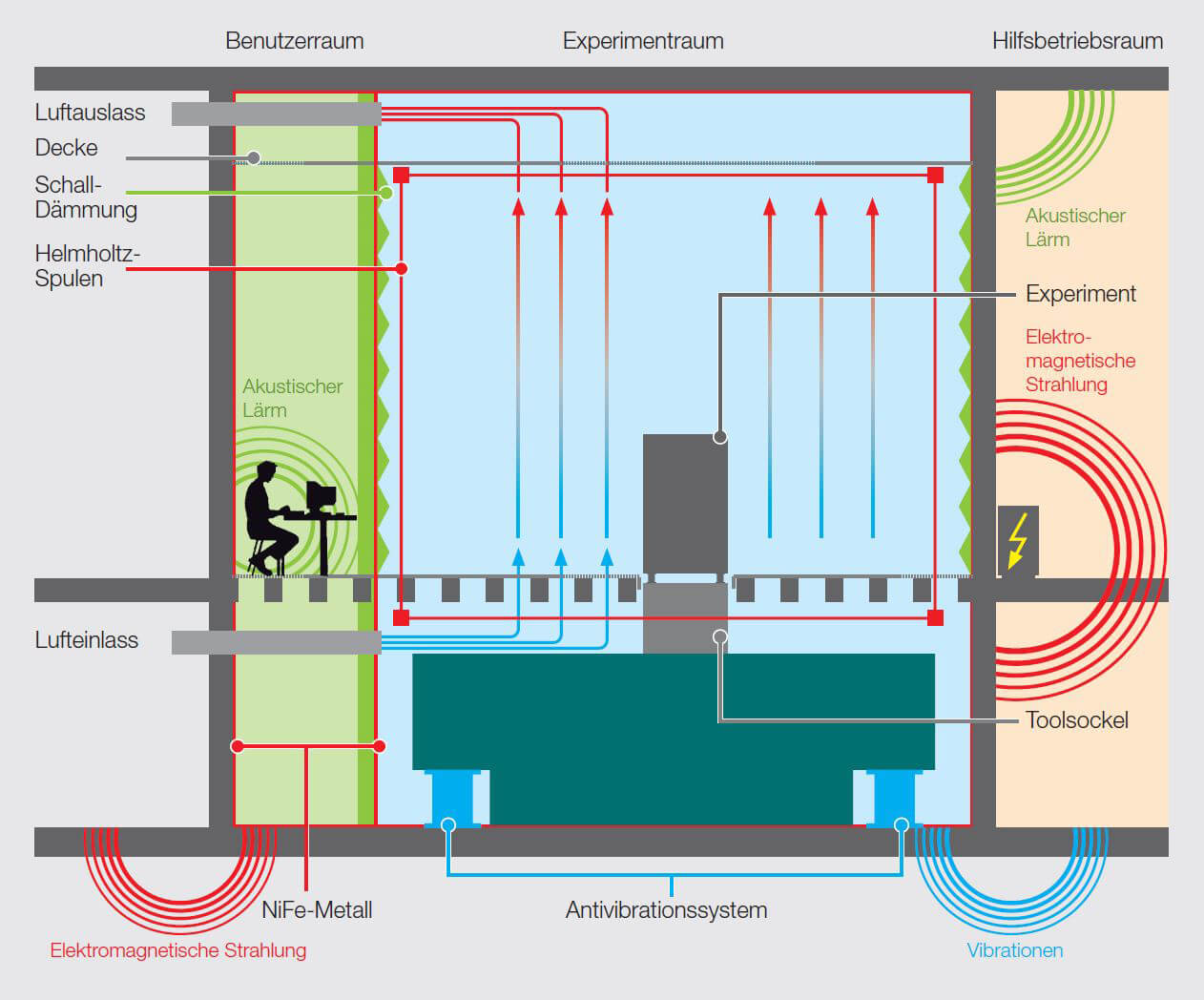
The illustration shows some of the most important measures to reduce external interference in the noise-free labs of the Binnig and Rohrer Nanotechnology Center of IBM and ETH Zurich.
The illustration shows some of the most important measures for reducing external interference in the “Noise-free Labs” of the Binnig and Rohrer Nanotechnology Center of IBM and ETH Zurich.
The sketch shows the result of perfect insulation with Bilz solutions for vibration isolation in the Binnig and Rohrer Nanotechnology Centers of IBM and ETH Zurich.
The sketch shows the result of perfect insulation with Bilz solutions for vibration insulation in the Binnig and Rohrer Nanotechnology Centers of IBM and ETH Zurich.

Tasks

The planning objective for the six noise-free laboratories was that spatial laboratory conditions must only deteriorate minimally. This is because the various technical devices in an experiment are often major disruptive factors: mechanical pumps for vacuum generation or warmth development for example, and electro-magnetic radiation from mains and control equipment. With traditional experiments it is sufficient to block off individual parameters such as temperature for example. With metrological developments in nanotechnology, however, there are experiments which are sensitive to multiple or all five disturbance variables. Therefore, temperature, humidity, vibrations, sound and electromagnetic fields should all be blocked off at the same time. These challenges could only be mastered by looking at the overall system.

Task 1: ground vibrations

At the beginning of the project phase different highly sensitive experiments were evaluated and measuring and fabrication devices taken into consideration. These highly sensitive instruments, for example electron beam recorders, transmission electron microscopes and spin-polarised scanning tunnelling microscopes had to be mounted vibration free.

bilz success-stories-binnig-rohrer-2 CAD drawing of the insulations with Bilz AIS™ Active Isolation System for Binning and Rohrer Nanotechnology Center by IBM and ETH Zurich.
CAD drawing of insulation with Bilz AIS™ Active Isolation System for Binnig and Rohrer Nanotechnology Center of IBM and ETH Zurich

Solution 1: Air cushioned foundation blocks

An air cushioned concrete block with the biggest possible mass was installed in each laboratory. The natural resonance of the air cushions is within the range of 1,2 – 2,4 Hz. The isolators are actively regulated through the air cushions. The experiments stand on these 34- to 80-tonne pedestals: the user, on the other hand, moves on a vibration decoupled floor.

For this a new Bilz product was used here, the AIS™ Active Isolation System High Performance, our active electronic-pneumatic vibration isolation for the highest demands for isolation effectiveness, decay time and level constancy.

Highlight

Underneath the laboratories trains drive past at high speed. The experiments are so well shielded, that this has no effect on the measurements.

Task 2: Air-borne noise

The smallest structures in the area of nanotechnology, such as molecules and atoms, are researched in the noise-free laboratories. Even the conditions of a clean room environment would be too “noisy” for this type of work.

Bilz success story: installation of acoustic insulation material in the experimental room Binning and Rohrer Nanotechnology Center (IBM Research Zurich)
Installation of Bilz acoustic insulation material in the Binnig and Rohrer Nanotechnology Center experiment room (IBM Research Zurich)
bilz success-stories-binnig-rohrer-2 Bilz success story: cross-section illustration of insulation with Bilz AIS™ Active Isolation System for Binning and Rohrer Nanotechnology Center by IBM and ETH Zurich.
Cross-section illustration of the insulations with Bilz vibration insulation for Binnig and Rohrer Nanotechnology Center of IBM and ETH Zurich.

Looking for the right product?

Looking for the right product?

Related Products

Cart
  • Your cart is empty Browse Shop
    Select the fields to be shown. Others will be hidden. Drag and drop to rearrange the order.
    • Image
    • SKU
    • Rating
    • Price
    • Stock
    • Availability
    • Add to cart
    • Description
    • Content
    • Weight
    • Dimensions
    • Additional information
    Click outside to hide the comparison bar
    Compare