

A Strong Combination for a Cost-Effective, Long-Term and Trouble-Free Solution
Successful Receiver Isolation of a Gear Grinding Machine Using BiAir® Membrane Air Springs and an Oscillating Foundation
Project Overview
Customer
Industry
Air Springs, Machine Foundations
Application
Products Used
Key Facts
- Machine weight: up to 25 tonnes
- Foundation block weight: approximately 20 tonnes
Background
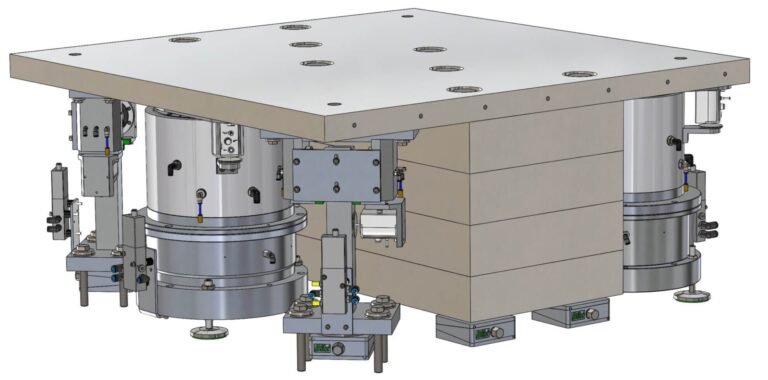
In installations where the machine does not have sufficient inherent rigidity for direct vibration isolation, a rigid intermediate structure must be installed between the machine and the vibration isolators.
Depending on the application, the position of the isolators can also be optimised at the installation site in coordination with the customer.
This helps achieve better vibration isolation performance while maintaining the required machine stability and operational accuracy.
The Challenge
In this application, vibrations generated by neighbouring machines and a nearby crane runway were affecting the operation of the GLEASON PFAUTER P 1200 G gear grinding machine.
As a result, the required machining accuracy could not be consistently maintained.
The application also involved significant load variations due to:
- Large machine displacement paths
- Workpieces weighing up to 10 tonnes
- Changes in load distribution during machining operations
A reliable receiver isolation solution was therefore required to protect the machine from external vibrations while maintaining its stability and precision during large load changes.
The Solution
Indirect vibration isolation improves the inherent rigidity of a machine installation and significantly enhances its dynamic behaviour, especially where large load changes and machine movements are involved.
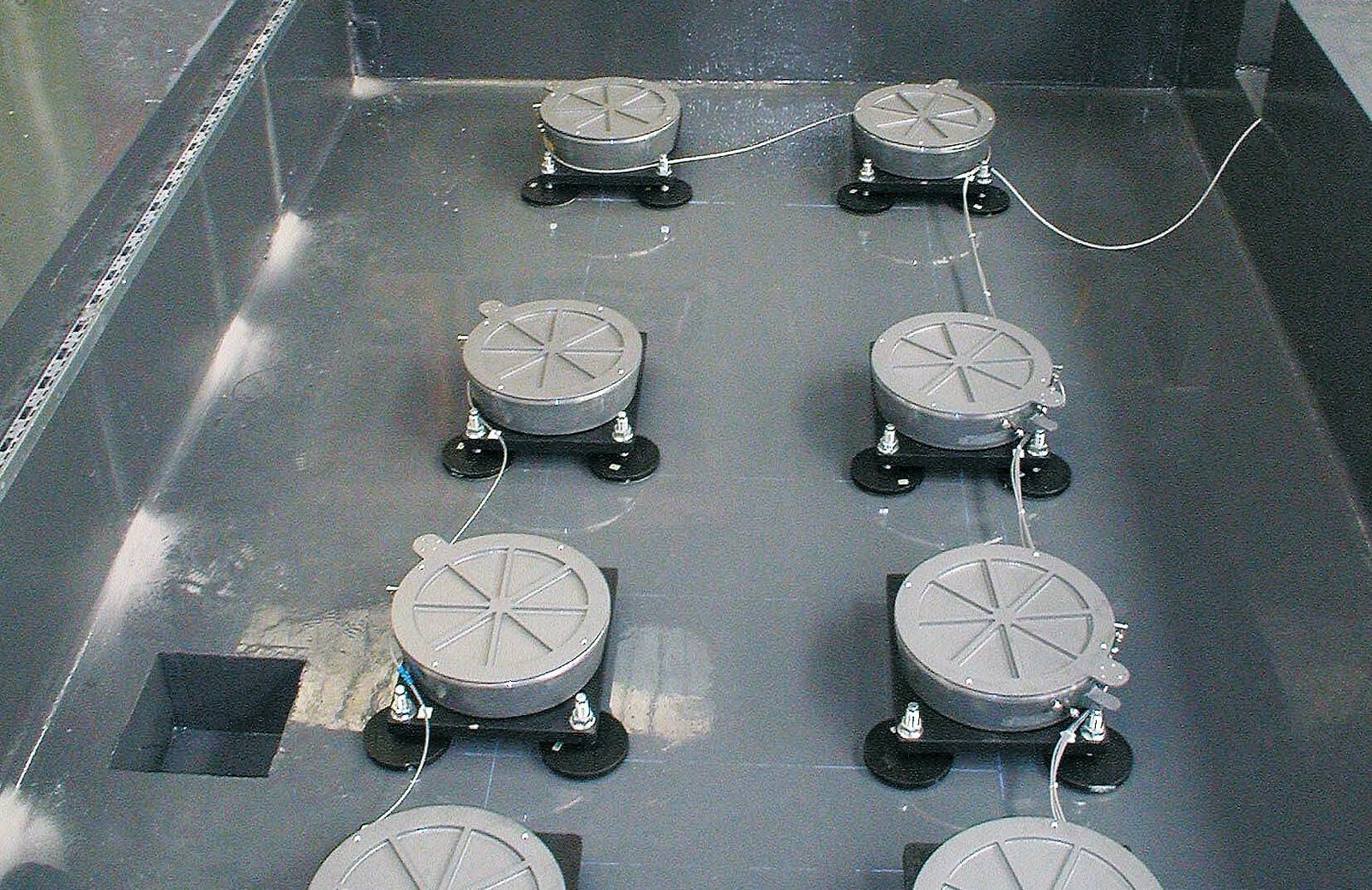
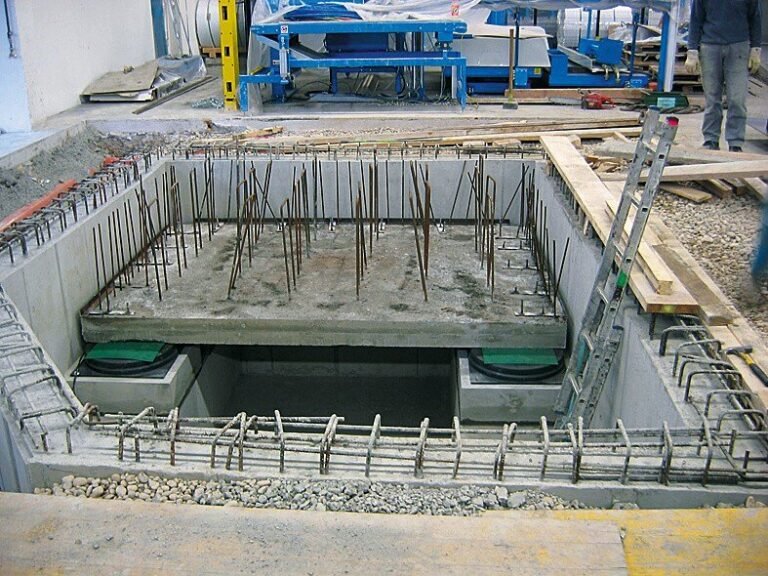
For this application, Bilz designed a foundation isolation system using low-frequency BiAir® membrane air springs with automatic level control.
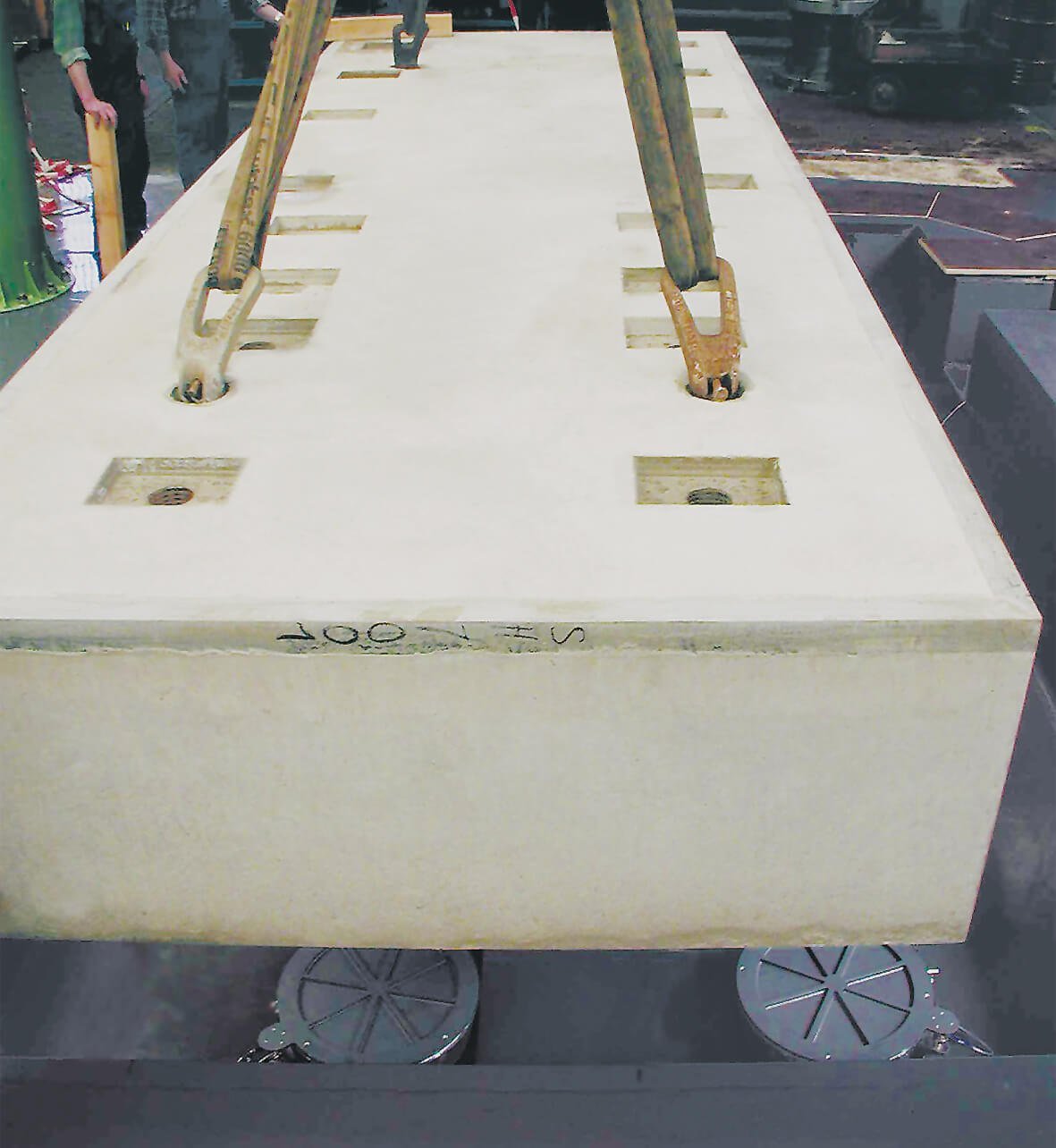
The system was installed using a prefabricated concrete foundation block.
A major advantage of this solution is the automatic levelling function.
Unlike conventional isolation pad sets or steel springs, the foundation block automatically returns to its predefined level after load changes.
The system achieves a reset accuracy of approximately ±0.1 mm.
This high level of accuracy is particularly important for precision machining applications where even small changes in machine level can influence machining quality.
The carefully designed foundation and vibration isolation system provides a technically reliable and cost-effective solution for the long-term, trouble-free operation of the machine.
A Strong Combination: BiAir® and Oscillating Foundations
BiAir® membrane air springs combined with oscillating foundations provide highly effective vibration isolation for applications that require exceptional stability and precision.
Typical applications include:
- Precision laboratories
- Sensitive measuring and testing machines
- Precision machining equipment
- Laser systems
- Optical equipment
- Electronic devices
The combination offers several important advantages:
- Increased machine precision through receiver isolation
- Protection of the surrounding environment through source isolation
- Reduction in vibration amplitude through additional foundation mass and increased moment of inertia
- Lowering of the overall centre of gravity for improved stability
- Reduced mechanical stress on electronic components, control systems, mounting elements and related equipment
- Improved quality and consistency of results, especially in applications where accurate levelling is critical
This combination of BiAir® membrane air springs and oscillating foundations provides an effective solution for applications where vibration control, machine stability and high machining accuracy are essential.
Results / Highlight
Looking for a similar solution?
Our application engineers help you select and size the right Bilz product for your machine and site.
Related Case Studies
Contact Us
Discuss your application with a Bilz specialist
Tell us about your machine, load and environment. Our engineers will recommend the right isolation, levelling or foundation solution for your project.
