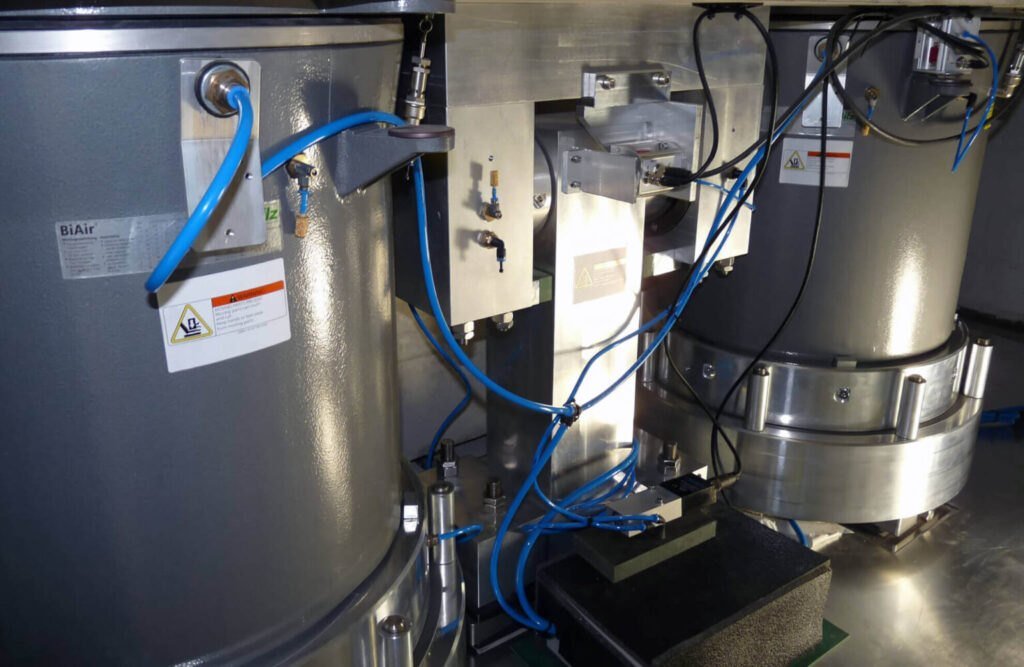
The Binnig Rohrer Ultra Low Vibration Lab in Zurich is designed for nanotechnology research and other applications where even extremely small vibrations can affect results.
The facility combines specialised infrastructure with Bilz active vibration isolation technology to create highly stable operating conditions.
The Binnig Rohrer Facility
Named after the inventors of the Scanning Tunnelling Microscope (STM), the laboratory supports advanced research and precision work at microscopic and nanometre scales.
For these applications, controlling vibration and environmental disturbances is essential.
The Challenge of Ultra-Precision Work
Sensitive equipment can be affected by:
- Ground vibration
- Nearby machinery
- Building movement
- Temperature variation
- Other environmental disturbances
Even very small disturbances can influence measurements or manufacturing processes.
Active Isolation System (AIS)
The Bilz AIS solution uses actively controlled, air-spring-supported concrete seismic blocks weighing approximately 30 to 68 tonnes.
The system is designed to detect and reduce vibration before it can significantly affect sensitive equipment.
Creating a Stable Environment
Active vibration isolation helps the facility maintain the stable conditions required for:
- Nanotechnology research
- High-resolution measurement
- Precision manufacturing
- Sensitive scientific instrumentation
Careful calibration allows the system to respond to the vibration frequencies most relevant to the application.
Supporting Ultra-Precision Applications
The Binnig Rohrer Ultra Low Vibration Lab demonstrates how advanced infrastructure and active vibra