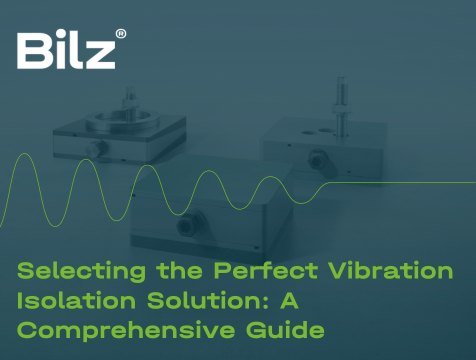
Choosing the right vibration isolation system is important for protecting sensitive equipment, improving accuracy and maintaining reliable machine performance.
The correct solution depends on the machine, vibration source and operating environment.
Understand Your Requirements
Before selecting a system, consider:
- Equipment size and weight
- Type of vibration source
- Required level of precision
- Available installation space
- Environmental conditions
- Future expansion requirements
Key Selection Factors
Performance Requirements
Choose a system based on how much vibration reduction your equipment requires.
Frequency Range
Different isolation systems perform better at different vibration frequencies, so understanding the vibration profile is essential.
Load Capacity
The system must safely support the equipment without reducing isolation performance.
Flexibility
If operating conditions may change, consider a solution that can be adjusted or upgraded.
Types of Vibration Isolation
Passive Isolation
Suitable for applications with predictable vibration sources and stable operating conditions.
Active Isolation
Ideal for highly sensitive equipment and low-frequency or changing vibration conditions.
Hybrid Systems
Combine passive and active technologies for more demanding applications.
Practical Considerations
Also consider:
- Budget
- Installation requirements
- Available space
- Maintenance needs
- Ease of operation
Choose the Right Solution with Bilz
Bilz offers vibration isolation systems for manufacturing, metrology, research and other precision applications.
Contact Bilz to identify the most suitable solution based on your equipment, environment and vibration control requirements.