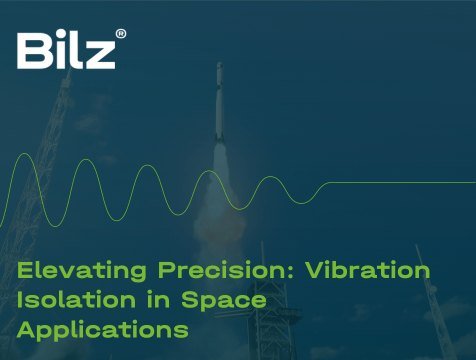
Space missions demand extremely high levels of precision. From launch to orbit, sensitive instruments must be protected from vibration, shock and micro-movements that can affect performance.
Vibration Challenges in Space
During launch, spacecraft experience intense vibration and dynamic loads. Once in orbit, smaller disturbances can come from:
- Reaction wheels
- Moving mechanisms
- Satellite subsystems
- Thermal changes
- Structural movement
These vibrations can affect optical systems, sensors and scientific instruments.
Vibration Isolation Technologies
Launch Vibration Control
Isolation systems help reduce the impact of strong vibration and shock during lift-off, protecting delicate spacecraft equipment.
Micro-Vibration Isolation
Active and passive isolation systems can help control smaller vibrations generated by onboard systems during operation.
Deep-Space Applications
Long-duration missions require isolation systems that remain reliable under vacuum, microgravity and extreme environmental conditions.
Materials and Design
Space applications require lightweight and high-performance materials such as:
- Advanced composites
- Specialised damping materials
- Lightweight structural components
- High-stability isolation systems
Extensive simulation and testing are essential before launch.
Supporting Space Precision
Effective vibration isolation can help improve:
- Instrument accuracy
- Optical stability
- Data reliability
- Equipment protection
- Mission performance
Looking Ahead
As space technology advances, intelligent control systems, advanced materials and active isolation technologies will continue to improve vibration management.
Vibration isolation will remain an important part of protecting sensitive equipment and supporting future space exploration.